Oversight is a calendar, not a sentiment
Most oversight failures aren't negligence. They're the absence of a schedule. Nobody decided not to check the plan — checking was simply never anyone's job, on any date. Here is what a working schedule looks like.
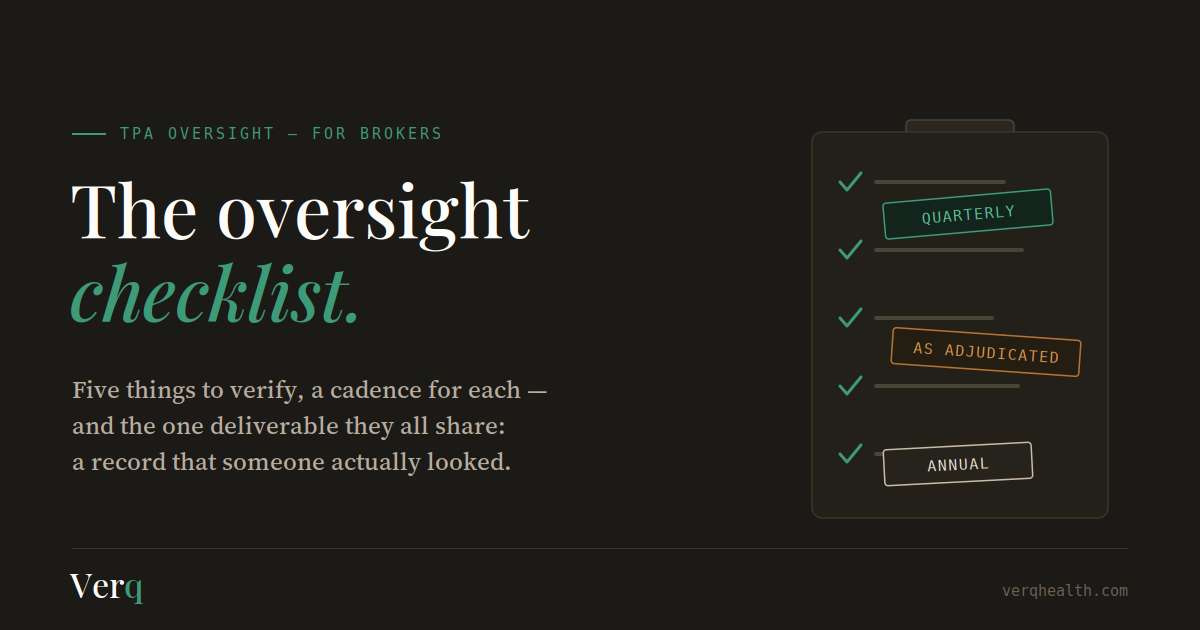
- 1. The plan document itself — annually, and at every amendment. Does the schedule of benefits agree with the benefits text? Were this year's amendments actually incorporated? A claim decision can't be defended if the governing document supports two answers.
- 2. Cost-sharing — quarterly. Deductibles, out-of-pocket accumulation, copay versus coinsurance: check that what members were charged is what the document prescribes. This is where small, systematic errors hide in plain sight.
- 3. Exclusions and limitations — quarterly. Not whether exclusions exist, but whether they're being applied — and applied consistently. An exclusion enforced for some claims and waived for others is a finding either way.
- 4. Large claims — as they're adjudicated. Any claim approaching your stop-loss attachment point gets checked against the plan before the filing: prior authorization on file, terms followed, cost-sharing correct. The carrier will run exactly this check before paying. Someone should run it first.
- 5. The money that moves after adjudication — annually. Overpayment recoveries, subrogation, vendor-run recovery programs: what was recovered, and who kept what? Recent ERISA litigation has made post-adjudication handling of plan assets a live fiduciary question.
The sixth item is the point
Every check above produces the same deliverable: a written record of what was reviewed, what was found, what explanation was received, and what changed. A gap you found and resolved is evidence of diligence. The identical gap, undocumented, is evidence of neglect.
The schedule is the defense. Not because every check finds a problem — most claims match the plan — but because “we checked, on these dates, and here's the file” is an answer. “We trust our TPA” is not.
This article is for general informational purposes only and is not legal advice. Court decisions and filings discussed involve particular facts and procedural postures; allegations are not findings of wrongdoing. Consult qualified ERISA counsel regarding your specific obligations.
A real plan-document audit, anonymized — every contradiction, ambiguity, and silence a claim decision can't defend, cited to the exact plan language. Download it and see what an annual document check should surface.
Download the sample report →